Serving Claremont, CA and surrounding areas. (909) 788-2977
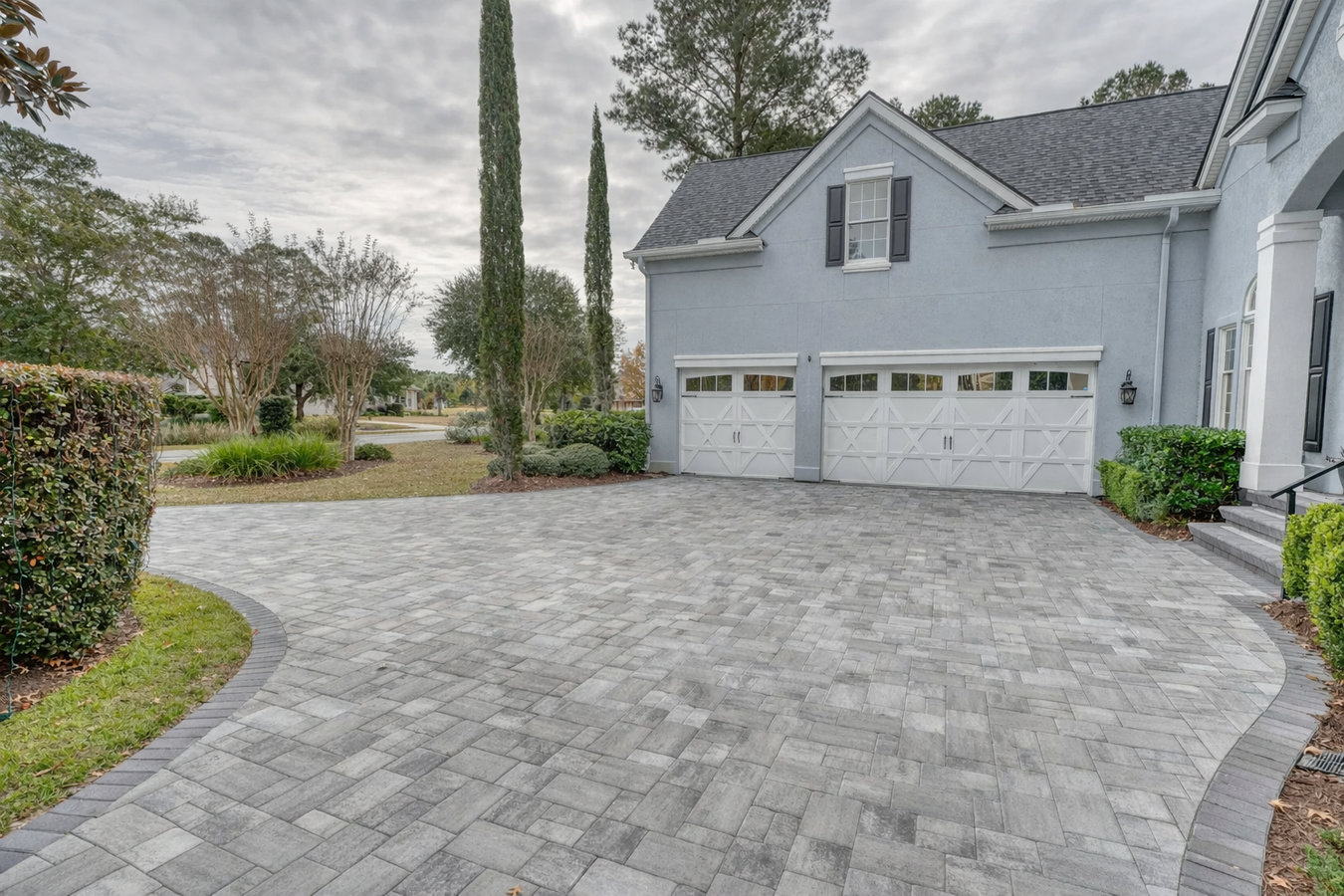
Cracked or shifting driveways are a common headache in Claremont. We install paver driveways built to handle local clay soils, tree roots, and summer heat - and they hold up far longer than a patched concrete slab.
Driveway pavers in Claremont are individual concrete, brick, or stone units set on a compacted base to form a durable surface. Most residential projects take two to five days from demolition to final cleanup, with the base preparation being the most critical phase.
Most homeowners call us after a cracked concrete slab has been patched one too many times. Claremont's clay soils expand and contract every season, and a rigid slab will keep breaking no matter how many times it is repaired. Pavers flex slightly with ground movement, which is why they outlast poured concrete in this area. If you are also thinking about reworking your yard layout, our retaining wall construction service handles the grading and slope work that often pairs with a driveway project.
We work throughout Claremont and the surrounding Inland Valley, handling everything from the permit application to the final joint sanding so you can stay off the phone with the city.
If you have patched the same crack more than once and it keeps reopening, the problem is underneath the surface. Claremont's clay soils expand and contract each season, and that movement will break a rigid surface repeatedly. Pavers are designed to flex slightly with the ground rather than fight it.
Walk across your driveway and check for sections that sit higher or lower than the rest, or spots where water pools after rain. Uneven surfaces are a tripping hazard and a sign that the ground has shifted - something common in Claremont given the combination of clay soils and seasonal rain.
If you see ridges or cracks running in a line from a nearby tree, roots are almost certainly the cause. Claremont's mature street trees are beautiful but aggressive. Pavers can be installed with root barriers, and if a root ever causes future movement, individual pavers can be lifted and reset without tearing out the whole driveway.
If rainwater pools near your garage or flows toward your foundation rather than away from it, that drainage problem can eventually cause foundation damage. Paver systems can be graded to direct water away from the structure - or, in some designs, to absorb it through the joints.
Every driveway project starts with a site visit to assess the existing surface, soil conditions, nearby trees, and drainage. From there we handle demolition of the old surface, full base excavation and compaction, and installation of the pavers in your chosen pattern and color. We also install edge restraints and sweep polymeric sand into the joints to lock everything in place. For properties where a sloped yard meets the driveway edge, we can pair the project with our retaining wall construction work to create a clean, unified transition.
For homeowners who want to extend the look from the driveway to the front entry or backyard, we also do walkway construction using matching materials. The Interlocking Concrete Pavement Institute publishes the industry installation standards our work follows.
Best for homeowners replacing a cracked or badly worn concrete or asphalt driveway with a long-lasting paver surface.
Ideal for new construction or additions where no driveway exists yet and you want to start with the right materials from day one.
Suits homeowners who need extra parking width or length and want the new section to match an existing paver surface.
Works well for homeowners who want a unified look from the street to the front door, using the same paver style throughout.
Claremont's clay-heavy soils are the main reason poured concrete driveways struggle here. Clay swells when it absorbs winter rain and shrinks back during the long dry summer - and that annual movement cracks rigid surfaces year after year. Pavers are individual units that can shift slightly without fracturing, which is why they hold up better in the Inland Valley than they would in a region with stable, sandy soil. The city also sees strong Santa Ana winds in fall that push debris and grit into joint sand, so we recommend polymeric sand - a joint filler that hardens and resists washout - on every project we do here. Homeowners in Upland face similar soil and climate conditions and call us for the same reasons.
Claremont is also known for its mature urban tree canopy, which is beautiful but creates a real challenge for driveways. Root systems from street trees eventually push under any rigid surface. With pavers, a root-damaged section can be lifted, the root managed, and the pavers reset - without jackhammering out a full slab. We also see a lot of work near Montclair where older homes have similar aging concrete driveways that are past the patch-and- repeat stage. If your neighborhood has an HOA - common near the Colleges and in the Village area - we can help you prepare the documentation needed for approval before any work begins.
We reply within one business day to schedule a free on-site visit. We will ask about your driveway size, what is there now, and whether you have HOA requirements so we can prepare before we arrive.
We walk the property, check the slope, soil, nearby trees, and drainage. You will receive a written estimate that separates materials, labor, and any permit fees - no surprises later.
If the City of Claremont requires a permit for your project - which is common when the driveway surface or drainage area changes - we handle the application. If you have an HOA, we help prepare the approval package.
Demolition and base prep take one to two days. Paver installation follows and the driveway is walkable the same day. We do a final walkthrough with you, explain joint maintenance, and haul away all debris.
Free estimate. No pressure. We reply within one business day.
(909) 788-2977We excavate and compact to depths that account for Claremont's expansive clay - the soil type that breaks most poured concrete driveways within a decade. A deeper, properly engineered base is what separates a driveway that lasts 30 years from one that cracks in three.
Driveway work in Claremont can require a city permit and - in many neighborhoods near the Colleges and the Village - HOA approval. We manage both processes so you are not making calls to Building and Safety or waiting on paperwork to sort itself out.
Claremont's tree canopy is one of the things that makes the city special, and we treat it that way. During the site visit we assess nearby trees and recommend root barriers where they make sense, so you protect your investment without sacrificing your trees.
We follow the installation guidelines published by the{' '}Interlocking Concrete Pavement Institute - the recognized industry standard for base depth, edge restraints, and joint sand type. That means your driveway is built the way the industry says it should be, not the way that is fastest for the crew.
Every detail from base depth to joint sand type is chosen with Claremont's specific soil, climate, and tree conditions in mind. That local focus is what keeps our driveways looking right years after the crew has packed up and left.
Hold back sloped soil and create level outdoor space to complement your new driveway.
Learn MoreExtend the paver look from your driveway to your front entry or backyard paths.
Learn MoreSpring books up fast - reach out now to lock in your project date before the season fills.