Serving Claremont, CA and surrounding areas. (909) 788-2977
Claremont Concrete & Masonry serves Diamond Bar homeowners with outdoor kitchen masonry, retaining walls, and block wall repair - bringing 10+ years of hands-on experience to the sloped lots and clay-soil properties throughout the city. We respond within one business day and provide written estimates before any work begins.
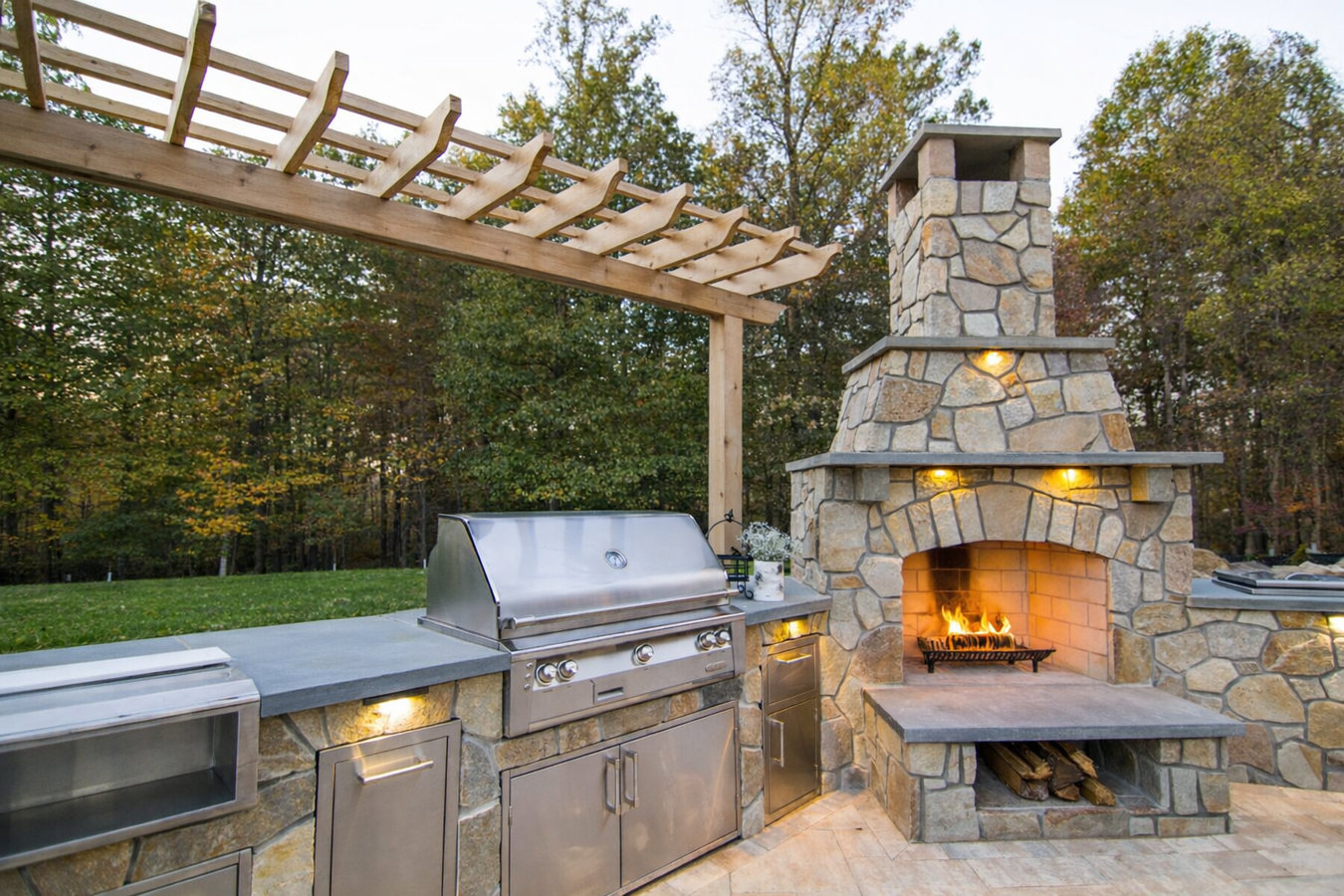
Diamond Bar's mild evenings and hillside backyards make outdoor kitchens a natural addition for homeowners who want to use that outdoor space year-round. Our outdoor kitchen masonry work on sloped Diamond Bar lots includes leveling and prepping the pad, building the block or stone frame, and setting countertop surfaces that hold up through the heat cycles that define San Gabriel Valley summers.
Sloped lots throughout Diamond Bar - especially those near Summitridge Park and the Tres Hermanos area - rely on retaining walls to hold graded terrain and keep landscaping in place through wet winters. We design drainage into every retaining wall we build in Diamond Bar, because clay soil without a proper outlet behind the wall generates hydrostatic pressure that destroys the footing within a few rainy seasons.
Most of Diamond Bar's boundary block walls were installed in the late 1960s through 1980s on footings that were not engineered for the seasonal movement of the clay soils here. Walls showing lean, consistent horizontal cracking, or open mortar joints across multiple courses have usually shifted at the footing and need reconstruction rather than patching to be safe again.
Ranch and traditional-style homes in Diamond Bar built in the 1970s and 1980s often have original brick chimneys, planters, and low front-yard walls that have been through 40 to 50 years of Inland Valley heat and winter wet-dry cycles. Mortar joints on these features typically soften well before the brick face fails, and re-pointing or targeted repair while the bricks are still sound avoids a far more expensive full rebuild later.
Steep driveways on Diamond Bar hillside properties experience more stress than flat ones because water channels down the slope rather than draining evenly, and root intrusion from mature trees is common in the older neighborhoods near Grand Avenue. Paver systems on these driveways allow sections that heave or shift to be lifted and reset individually, rather than requiring a full concrete replacement each time the surface fails.
Diamond Bar homeowners with high-value stucco homes near the 57 and 60 freeway corridors frequently use stone veneer to update exterior elevations, entry pillars, and backyard entertainment walls without a full rebuild. Veneer on hillside properties in Diamond Bar requires a proper moisture barrier and drainage mat behind the stone because stucco substrates on older homes often have existing hairline cracks that let water in during winter rains.
Diamond Bar was developed quickly between the late 1960s and the 1980s, and most of the housing stock is now 40 to 60 years old. That age bracket means a large share of original concrete driveways, block walls, brick chimneys, and masonry planters are either at or well past their intended service life. The city sits in the Pomona Valley foothills on clay-heavy soil that swells with winter rain and contracts through the long, dry summer. That annual movement - even just a fraction of an inch at the footing level - accumulates stress in concrete and masonry over decades. Cracked driveways, leaning block walls, and failing retaining walls throughout Diamond Bar are mostly not signs of poor original construction. They are the result of soil doing what clay soil does here, working against structures that were not designed to flex with it.
The hillside character of Diamond Bar adds a second layer of complexity. Many properties have significant grade changes, terraced yards, and retaining walls that are doing real structural work - not just decorative work. When those walls were built on undersized footings in the 1970s without adequate drainage behind them, every wet winter puts more pressure on the assembly. Summers here regularly reach the mid-90s and beyond, and that sustained heat dries out mortar joints faster than in cooler coastal communities. The USGS notes that expansive clay soils are one of the most costly geologic hazards in the United States, and the foothills of eastern Los Angeles County sit squarely in that category. Masonry that is designed for these conditions - deeper footings, proper drainage, right mortar mix - lasts. Masonry that ignores them fails on a predictable schedule.
Our crew works throughout Diamond Bar regularly, and we understand the local conditions that affect masonry work here. We pull permits from the City of Diamond Bar Building and Safety Division for structural jobs and are familiar with the review process for retaining walls and block walls on the hillside lots that make up a significant portion of the residential properties in the city. Diamond Bar has its own city building department separate from Los Angeles County, and navigating that process correctly at the start avoids delays that push project completion deep into the rainy season.
Most of our Diamond Bar work happens in the neighborhoods that wind up into the hills east of the 57 freeway and west of the 60, where lots slope toward or away from the street rather than lying flat. Diamond Bar Boulevard and Grand Avenue are the main north-south arteries we use to move between jobs, and the city's proximity to both Pomona and Walnut means we are often running work in adjoining cities on the same day. The Diamond Bar Center near Summitridge Park sits at a central point in the city, and many of the homes within a mile or two of it were built during the 1970s building peak - the age bracket where masonry work is most commonly needed.
We regularly work in neighboring Walnut to the east, where the housing stock and hillside conditions are very similar to Diamond Bar, as well as in Pomona to the north, where older flat-lot homes have their own distinct masonry repair profile. Understanding the differences between these areas - hillside drainage versus flat-lot settling, older ranch-style homes versus mid-century bungalows - shapes how we price and plan each job.
Reach us by phone or through the contact form and describe what you are seeing - a leaning wall, a cracked driveway, a project you want to add. We respond to all Diamond Bar inquiries within one business day.
We visit your Diamond Bar property to assess the scope in person - including the slope of the lot, soil conditions, and whether the work requires a permit. You receive a written estimate with a clear line-item scope before you agree to anything.
For jobs requiring a Diamond Bar building permit, we handle the application and communicate the review timeline clearly. Construction begins once permits are in hand, and we give you a realistic completion window before we break ground.
When the work is done, we walk through the finished project with you to confirm everything matches the scope. We remove all job debris and leave the site clean before we collect final payment.
We serve all of Diamond Bar - from the hillside neighborhoods near Summitridge Park to the properties along the 57 and 60 freeway corridors. Free written estimates, one business day response.
(909) 788-2977Diamond Bar is a city of roughly 55,000 residents in eastern Los Angeles County, sitting at the junction of the 57 and 60 freeways where the Pomona Valley foothills meet the flat floor of the greater San Gabriel Valley. The city was developed rapidly between the late 1960s and the 1980s, transitioning from cattle ranch land into a planned suburban community. That growth produced a housing stock that is now between 40 and 60 years old - overwhelmingly single-family owner-occupied homes with stucco exteriors, tile or composition shingle roofs, and attached garages. The city has one of the higher homeownership rates in the region, above 70%, which reflects a community of long-term residents who invest in maintaining their properties. Neighboring Walnut sits directly to the east and shares much of the same hillside character and housing stock age.
The city is split between flat valley-floor neighborhoods near the freeway corridors and hillier terrain in the northern sections near Summitridge Park and the Diamond Bar Center, where streets wind up ridgelines and lots have significant slope. Diamond Bar High School is a well-known community anchor near the center of the city, and the Tres Hermanos conservation area marks the eastern edge. The mix of flat and hillside terrain means masonry needs vary widely across the city - retaining walls and hillside drainage work dominate in the northern neighborhoods, while flat-lot driveway and patio repair is more common near the freeway corridors. We also serve homeowners in nearby Chino, where newer residential development brings a different set of masonry project types.
Restore structural stability and stop foundation damage before it spreads.
Learn MoreFix cracks, spalling, and mortar deterioration for a safe, weathertight chimney.
Learn MoreReplace deteriorated mortar joints to protect and extend the life of your masonry.
Learn MoreRebuild or replace damaged bricks to restore appearance and structural integrity.
Learn MoreInstall durable, attractive pavers that enhance curb appeal and withstand heavy use.
Learn MoreBuild strong retaining walls that control erosion and transform sloped terrain.
Learn MoreCustom-built fireplaces designed for safety, efficiency, and lasting style.
Learn MoreConstruct solid, low-maintenance block walls for privacy, security, and boundaries.
Learn MoreCreate a level, load-bearing block foundation for new and existing structures.
Learn MoreBuild custom outdoor kitchens in stone and brick for year-round entertaining.
Learn MoreDesign and install durable walkways that guide guests and enhance landscaping.
Learn MoreLay custom brick walls that add character, privacy, and lasting value.
Learn MoreRepoint worn mortar joints to prevent water intrusion and preserve your brickwork.
Learn MoreWe serve all of Diamond Bar and respond within one business day. Call now or submit a request online before the next rainy season reveals a bigger problem.